
Cost of Steel Shingles in South Florida: 2026 Guide
Installed steel shingles run about $9 to $16 per square foot, or $900 to $1,600 per 100 square feet, so a typical 2,000-square-foot roof lands near $18,000 to $32,000 before local adjustments. That range is only your starting point in South Florida. Once you add tear-off, high-wind fastening, permits, inspections and a coating built for coastal air, two bids for the same house can land thousands of dollars apart for reasons that have nothing to do with profit. The cost of steel shingles makes sense only when you compare complete, code-compliant assemblies line by line, not a shingle price quoted over the phone.
Table of Contents
- Steel Shingle Installed Costs at a Glance
- What Moves Your Steel Shingle Bid in Miami-Dade and Broward
- How Coating, Profile and Gauge Change the Price
- Reflective Finishes and Cooling Savings Compared
- Coastal Salt, Wind Approvals and Insurance Claims
- How to Build a Net-Cost Comparison Before You Sign
- Get an Itemized Steel Shingle Quote Before You Decide
Steel Shingle Installed Costs at a Glance
A square foot in a roofing bid means one square foot of actual roof area, including pitch and overhangs. It isn't the price of one shingle. Roofers also price by the square, which is 100 square feet of roof area, so $9 to $16 per square foot becomes $900 to $1,600 per square.
The SubcontractorHub metal shingles guide places installed steel or metal-shingle roofing at approximately $9 to $16 per square foot, with a 2,000-square-foot roof at roughly $18,000 to $32,000 before adjustments. The same guide puts asphalt shingles at $4 to $9 per square foot and broader metal roofing at $8 to $25 per square foot. For material alone, Best Buy Metals reported steel-shingle material costs of approximately $3 to $7.50 per square foot in 2025, which shows how much of an installed bid is labor, underlayment, flashing and code work.
Installed Steel Shingle Cost Compared With Other Roofing Options
| Roofing option | Per sq ft | Per 100 sq ft (one square) | Typical 2,000 sq ft roof | Typical service life |
|---|---|---|---|---|
| Asphalt shingles (reference) | $4–$9 | $400–$900 | $8,000–$18,000 | 15–30 years |
| Steel shingles, material only (2025) | $3–$7.50 | $300–$750 | $6,000–$15,000 | 40–70 years (metal roofing) |
| Steel shingles, installed | $9–$16 | $900–$1,600 | $18,000–$32,000 | 40–70 years (metal roofing) |
| Broader metal roofing, installed | $8–$25 | $800–$2,500 | $16,000–$50,000 | 40–70 years (metal roofing) |
Steel typically costs 2 to 3 times as much upfront as basic asphalt. The counterweight is service life. Metal at 40 to 70 years outlasts asphalt at 15 to 30 years, so an asphalt roof may need full replacement inside the life of one steel roof. That doesn't make steel automatically cheaper. It means you should compare cost per year of service, not just the contract total.
Practical rule: If a bid only gives you a per-square-foot number, you don't have a bid yet. You have a planning range.
Use our roofing calculator to set a rough budget, then demand an itemized scope. In Miami-Dade and Broward, removal and disposal, permitting and inspections, wind-load compliance, corrosion-resistant fasteners, reflective finishes and warranties all sit inside that final number. Treat published ranges as the frame, not the finished price.
What Moves Your Steel Shingle Bid in Miami-Dade and Broward
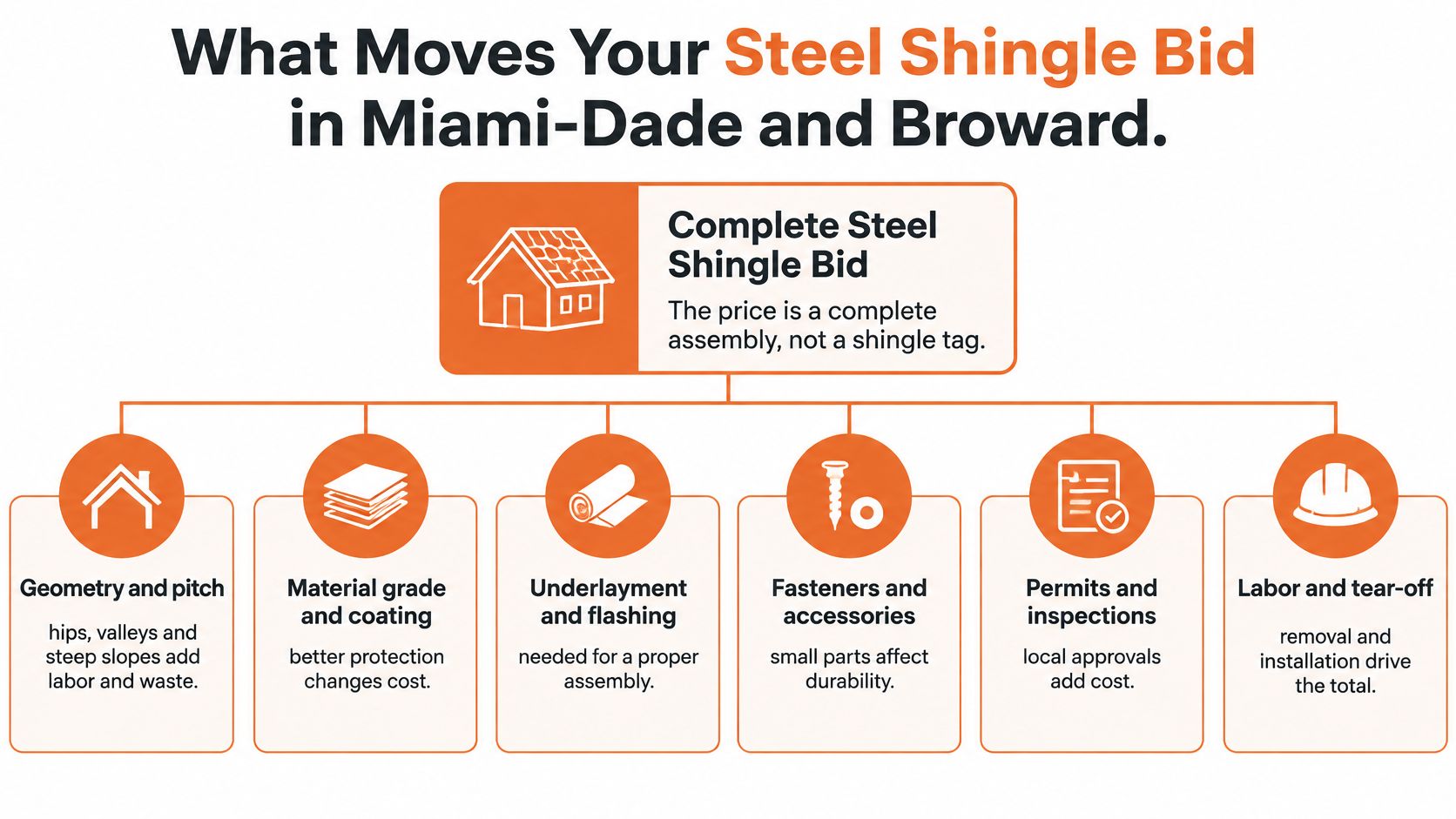
Two contractors can measure the same roof and hand back totals that differ by thousands of dollars, because they aren't pricing the same assembly. The spread usually comes from five places, and each one belongs on its own line in the proposal.
Geometry and pitch. Hips, valleys, dormers and steep slopes slow the crew and multiply cuts. A roof that measures 25 squares can absorb 28 or 30 squares of material once waste on the complex runs is counted. A single blended per-square price hides that.
Tear-off and disposal. Old shingle, tile or metal has to come off and leave the property. Dumpsters, disposal fees and the labor to strip more than one layer are their own cost, and a bid that folds them into the square count is the easiest one to underbid.
Decking condition. Soft or deteriorated decking gets replaced before anything goes down. Nobody knows how much until the tear-off is finished, so ask how the contract handles discovered rot: per sheet, per square, or open-ended.
Underlayment, flashing and trim. These are the parts that keep water out at edges, penetrations and wall transitions. A bid that names the underlayment product and the flashing details can be compared against another. One that says "standard" cannot.
Wind fastening and permitting. High-wind fasteners, approval for the specific assembly, plus Miami-Dade or Broward permit and inspection scope add parts, labor and time. A proposal that's silent on permits and inspections isn't cheaper. It's incomplete.
Why Every Quote Needs a Validity Date
Steel pricing runs in cycles, as the Roofing Brief tracking of the U.S. Bureau of Labor Statistics producer-price series for iron and steel shows: sharp run-ups, then partial pullbacks, without ever returning to the earlier baseline. That path runs through coil, galvanizing or aluminum-zinc coating, paint, forming, packaging and transport. A softer steel index doesn't produce an equal drop in your quote, because labor, fasteners and overhead don't fall with it. Get the material specification and the quote's expiration date in writing.
We're based in Hialeah, and every city we serve gets CertainTeed ShingleMaster and Polyglass certified installation, full local permitting, manufacturer-spec materials and our own crew from estimate through final inspection, never a subcontractor. That last point affects price directly. A crew paid by the square has reason to move quickly past the flashing details and decking repairs that decide whether the roof passes inspection and holds through a storm.
Match the bid to your city's permit rules, not to a generic South Florida average.
How Coating, Profile and Gauge Change the Price
Three material choices move the price per square more than anything else. Start with the coating, because it's the easiest place for a low bid to hide a short life.
Coating Is the Corrosion Budget
The ENERGY STAR Roof Products Program Requirements specify that steel roofing products use a corrosion-resistant coating such as zinc, aluminum, zinc-aluminum alloy, or tin. That coating separates base steel from moisture and coastal contaminants. A thinner or unspecified coating is the cheapest way to lower a bid and the most expensive one to regret near salt air, where cut edges and fastener holes fail first. Your proposal should name the coating type and its salt-exposure provisions outright. If it doesn't, you're being asked to trust the one detail that decides how long the roof lasts.
Profile and Fasteners Decide Wind Behavior
Concealed-fastener systems hide attachment points under the shingle above, which protects fasteners from weather and gives a cleaner finish. Exposed-fastener systems cost less to install, but every screw head is a future maintenance point as washers age. For high-wind exposure, I'd favor concealed attachment with the fastening pattern the product approval requires. Our breakdown of standing seam metal roof cost covers how concealed systems price out against other metal profiles.
Gauge is steel thickness. Thicker steel costs more and resists denting and fastener pull-through better. Thinner steel saves money today and shows every footstep and wind-borne impact later. The paint or finish warranty belongs in this same conversation, because repainting a faded roof is a cost you'll either pay the manufacturer to cover or pay yourself later.
The Three-Point Bid Check
- Coating type: Named in writing, with the metallic coating system spelled out.
- Profile and fasteners: Concealed or exposed, with the wind-rated fastening pattern stated.
- Gauge and finish warranty: Thickness plus the paint warranty term, as a priced line.
Underlayment is its own line item too, and it must match the wind-rating requirement for your approval. Compare proposals on installed cost per roofing square with identical inclusions, not on the advertised price of individual shingles. When the coating isn't stated, the cheapest bid is rarely the cheapest roof.
Reflective Finishes and Cooling Savings Compared
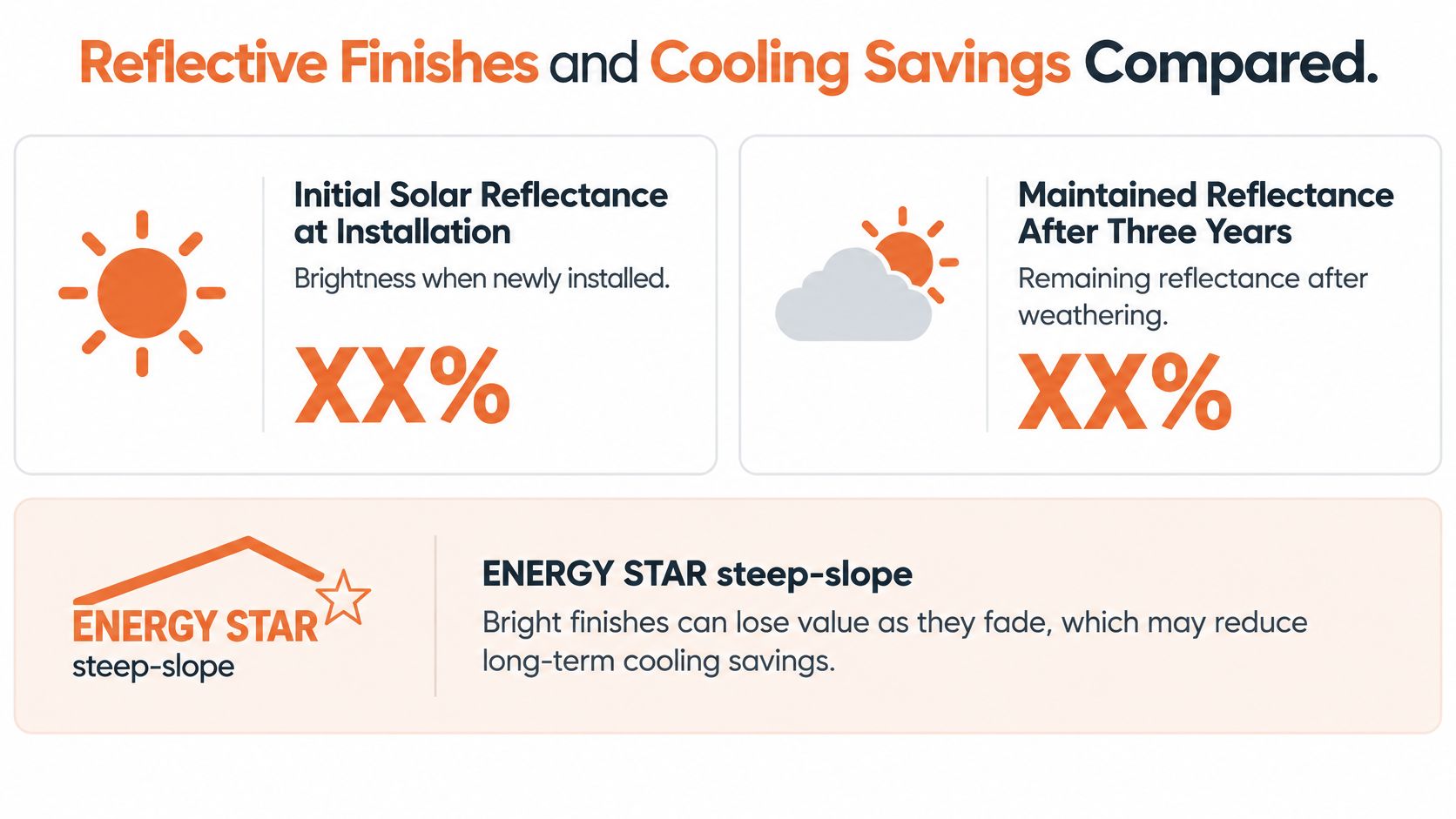
Reflectance is two numbers, not one. Initial solar reflectance measures brightness at installation. Maintained reflectance measures what's left after weathering. A bright finish that fades fast loses value every summer.
The ENERGY STAR roof program requirements classify steep-slope products by initial solar reflectance of at least 0.25 and three-year maintained reflectance of at least 0.15, alongside reliability and warranty requirements. The same requirements cite EPA materials reporting potential cooling-energy savings of up to 50% in suitable situations and peak cooling-demand reductions of approximately 10 to 15%. A more reflective surface rejects more sunlight, so less heat moves into the attic and your air conditioner runs less.
A South Florida field study from the Florida Solar Energy Center found a highly reflective white metal roof reduced cooling energy by about 28%, compared with 3 to 5% for shingles. That's one tested white system, not a promise for every steel shingle in any color. Our metal roofing uses reflective coatings that cut cooling costs during the hottest months, but I'd still model your savings from tested reflectance values, not from a color name.
Reflectance Thresholds and Reported Cooling Savings
| Measure | Reported figure | Condition that applies |
|---|---|---|
| ENERGY STAR steep-slope initial solar reflectance | at least 0.25 | Qualifying product at installation |
| ENERGY STAR maintained reflectance after three years | at least 0.15 | Product must also meet reliability and warranty requirements |
| EPA cooling-energy savings | up to 50% | Suitable situations only |
| EPA peak cooling-demand reduction | about 10–15% | Tied to insulation, ducts and HVAC efficiency |
| Federal cool-roof estimate, annual air-conditioning use | up to 15% | Tied to climate, building design and roof reflectance |
| South Florida study, tested white metal roof, cooling energy | about 28% | One tested system, not every metal shingle |
| South Florida study, tested shingle roof, cooling energy | 3–5% | Same study, for comparison |
Run the payback check yourself. Take the premium for a light-colored or certified reflective steel shingle and divide it by your expected annual electricity savings. Insulation, duct location, HVAC efficiency, roof orientation and occupancy all move that answer. Ask for tested initial and aged reflectance, the coating warranty and maintenance requirements in writing before you count a single dollar of savings.
Coastal Salt, Wind Approvals and Insurance Claims
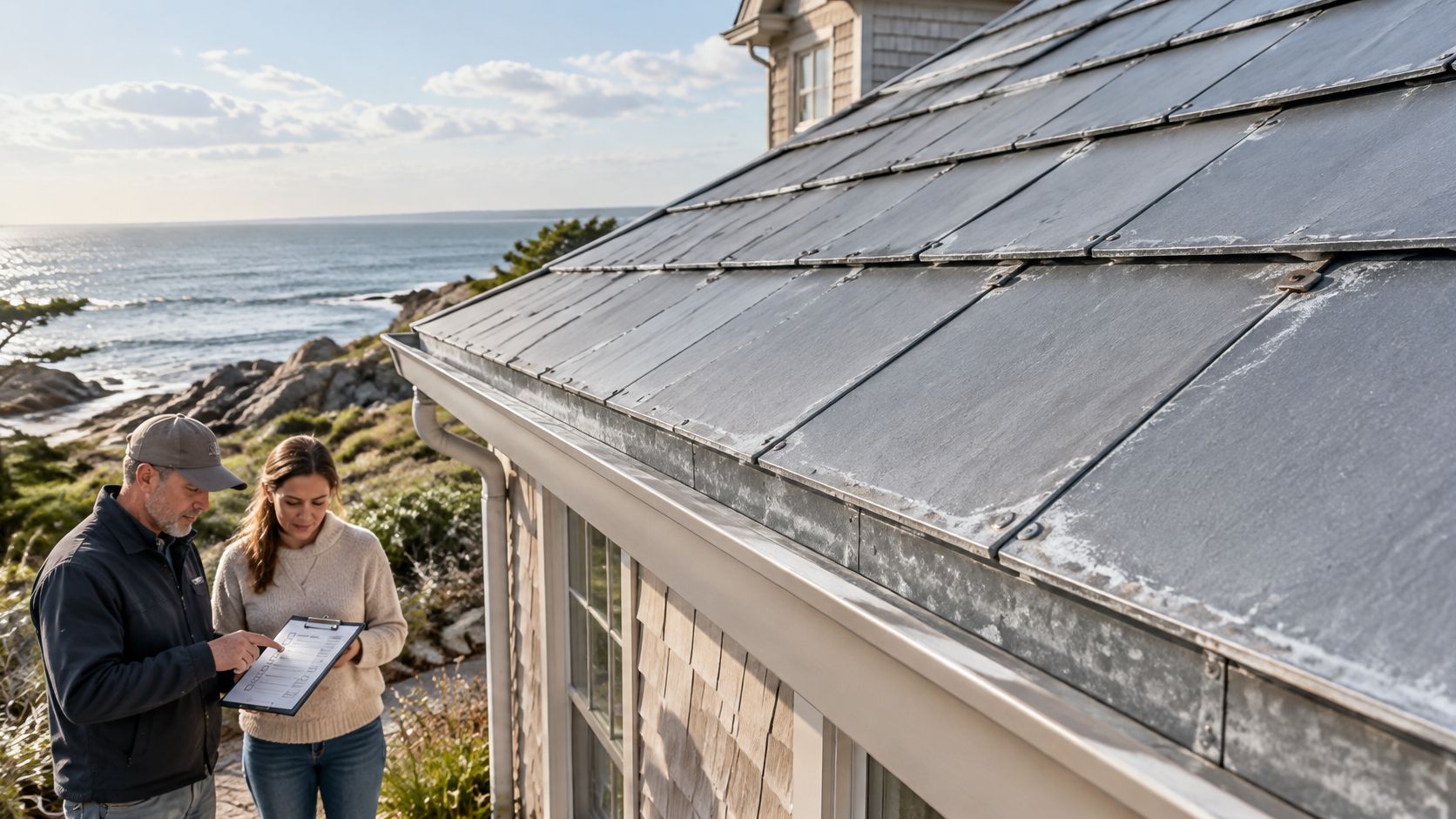
Coastal ownership cost starts after installation day. Salt air and humidity attack thin coatings first at cut edges, seams and fasteners. The coating you saved money on during bidding becomes repainting and flashing repairs later, usually at the worst spots to reach.
Ask every quote for the Miami-Dade product approval, or the Broward approval it relies on. Wind-load fastening and detailing are priced items with specific fastener patterns and inspection steps. A bid that says hurricane-rated without naming an approval is making a marketing claim, not a code commitment. We specialize in metal roofing that's hurricane-rated and heat-reflective, with a 50+ year lifespan and low maintenance, and the approval paperwork is part of the scope, not a brochure point.
A metal roof lowers your insurance bill only when your carrier's written terms say it does. Until then, budget zero discount.
Three Questions for Your Insurer
- Discount eligibility: Does this exact steel-shingle assembly qualify for a mitigation discount?
- Required documents: Which inspection or wind-mitigation forms must you file, and who signs them?
- Cosmetic exclusions: Do dents and finish wear count as excluded cosmetic damage?
Minor, cosmetic repairs are often cheaper paid out of pocket than filed as a claim, since a claim can raise your premium. When storm damage is real and documented, our insurance claims support helps you present the damage record cleanly. If a claim turns into a dispute over scope or payment, PostDamage's property claim assistance is worth reviewing before you accept a settlement. Carry a storm-repair allowance sized to your exposure and to the age of the roof you're replacing, and judge the new roof by documented approvals and policy terms rather than assumptions.
How to Build a Net-Cost Comparison Before You Sign
A net-cost comparison answers the question the sticker price can't. What will this roof cost you to own?
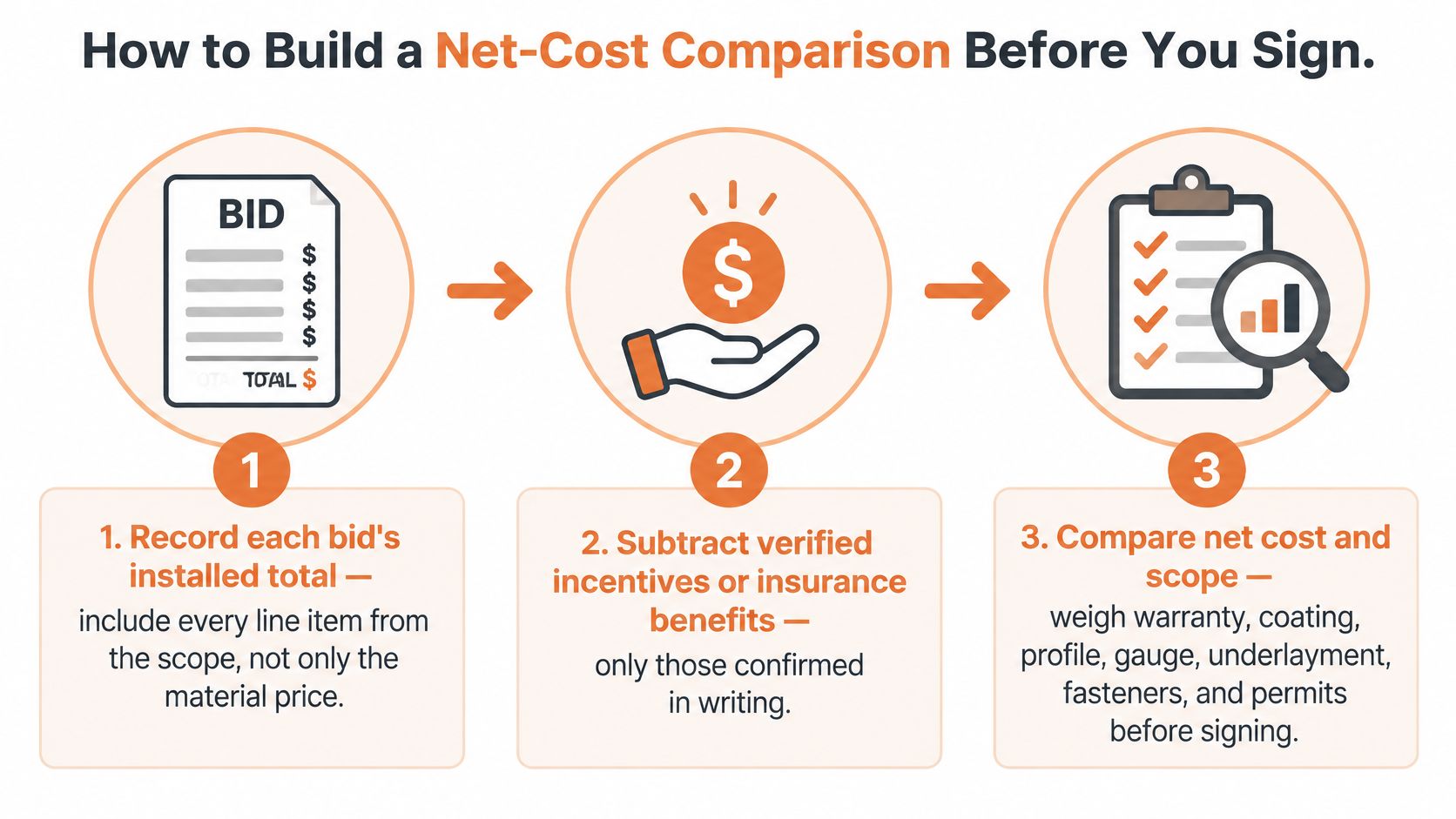
- Record the installed total. Write down each bid's full price with every line item from the scope. A material-only figure hides labor, tear-off, flashing and permits, which is where bids differ.
- Subtract verified benefits only. Remove incentives or insurance benefits confirmed in writing. The U.S. Department of Energy cool roofs guidance notes federal guidance putting cool-roof reductions in annual air-conditioning use at up to 15%, and even that figure shifts with climate, building design and reflectance. Unverified savings belong in a note, not in your math.
- Add modeled cooling savings. Use the reflectance level in the proposal and published ranges, then reduce the estimate where insulation is thin or the HVAC system is inefficient. Energy savings are real, but they may not alone repay a premium roof.
- Add expected maintenance. Budget repainting, plus fastener and flashing repairs over the comparison period. Exposed-fastener systems need more of this line than concealed ones.
- Add a storm-repair allowance. Size it to your exposure, nearby trees and the age of the system you're replacing. A coastal home shouldn't carry the same allowance as an inland one.
- Compare over the same period. Use about 40 years. An asphalt roof will need replacement inside that window, so its second roof belongs in the total.
- Ask whether repair solves it. We say no to jobs we don't think the customer needs, and we won't sell a replacement if a repair is enough. A contractor who offers the smaller fix is pricing your problem, not a quota.
Steel shingles, standing-seam panels and exposed-fastener panels have different costs, repair methods and code ratings, so don't let anyone price them as one generic metal category. A finished comparison gives you one net figure per bid, with each assumption written next to it. If a number in the column has no source or document behind it, pull it out and see if the winner changes.
Get an Itemized Steel Shingle Quote Before You Decide
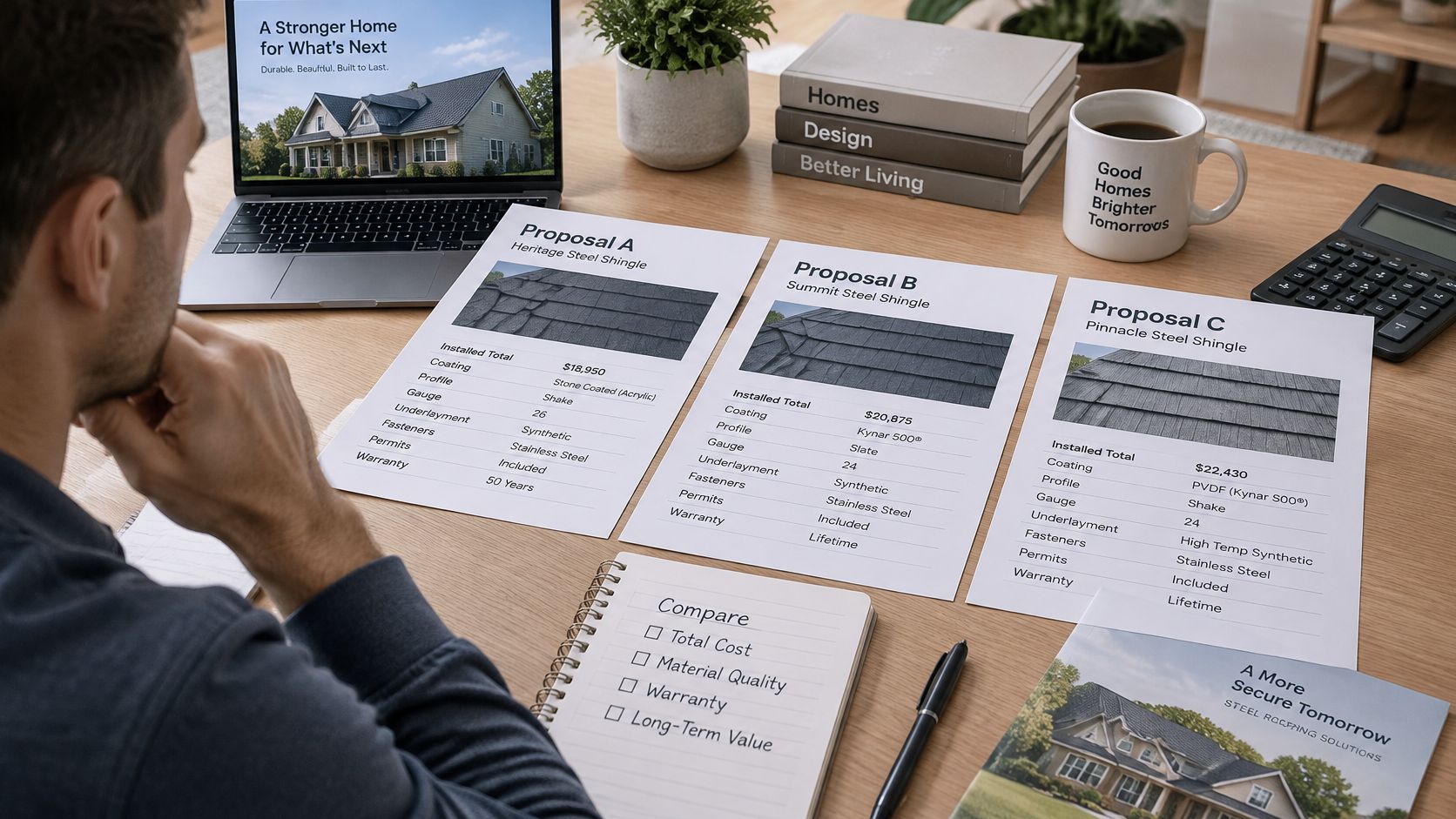
Request three itemized proposals and sort them the same way. Installed total first, then coating, profile, gauge, underlayment, fasteners, permits and warranty. A bid missing any of those lines isn't comparable to the others, no matter how low the total looks.
As you interview contractors, it's worth learning to spot red flags when hiring roofers so vague scopes and pressure tactics stand out before you sign anything. Then hold every proposal, ours included, to the same checklist.
You get this from us at no cost. We offer free on-site estimates for roof replacements, with permits handled for the customer. We offer a free roof inspection with no obligation and a response in minutes, plus a free quote with no pressure and no obligation. Rooftop Solutions is based in Hialeah and serves Doral, Miami Lakes, Coral Gables, Pinecrest, Palmetto Bay, South Miami, Kendale Lakes, Pembroke Pines and Cooper City across Miami-Dade and Broward.
Our metal roofing is hurricane-rated and heat-reflective, which lets you test the figures in this guide against a real, written scope for your own roof. Call us or book an inspection and we'll put a line-by-line estimate in your hands, one you can set next to any competing bid and compare fairly.
Your steel shingle decision should rest on a written, itemized scope, not a per-square-foot guess, and that's exactly what we'll build for you during a free inspection or on-site estimate. Visit Rooftop Solutions to book your free inspection today and get a quote that names the coating, gauge, fasteners, permits and warranty before you commit to a dollar.
